
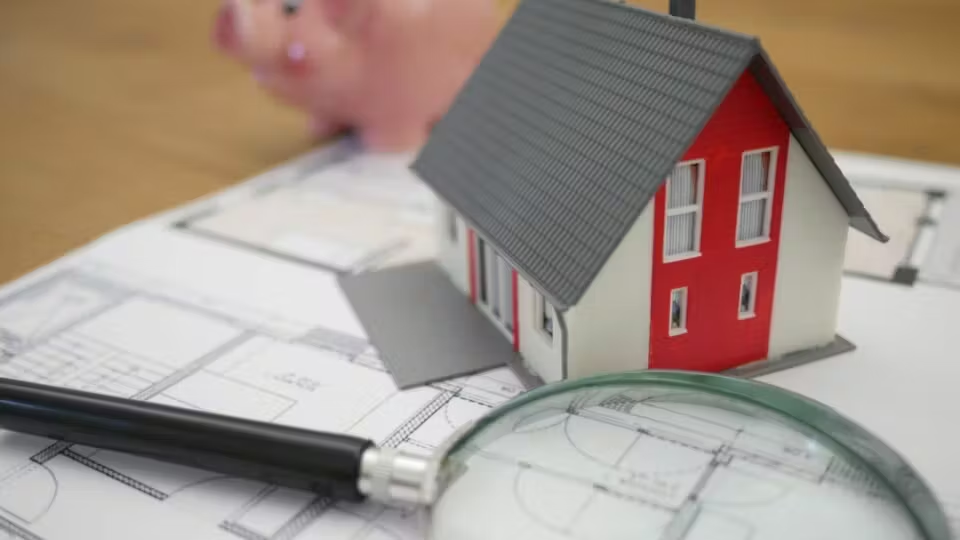

“You’re just throwing money away on rent.” You’ve probably heard this before. But is it true? The honest answer is: it depends. Renting and buying both make sense, just for different people and different situations.
The Case for Renting
Renting gives you flexibility. If your job could move you to a new city, or you’re not sure where you want to settle down long-term, renting lets you leave without the stress of selling a house. Renting also means you’re not on the hook for surprise repairs. If the water heater breaks, that’s your landlord’s problem, not yours. Or a plumbing mainline replacement on Christmas Eve (this has happened to me) – again, not your problem.
Renting can also make sense financially in expensive housing markets. In some cities, home prices are so high that renting and investing the difference can actually build more wealth over time than buying. And sometimes, renting can mean utilities are covered by the landlord – in certain markets, that is huge, with energy costs fluctuating due to high loads/usage.
The Case for Buying
Buying builds equity. Every mortgage payment (after interest) puts money toward something you own, instead of a landlord’s investment. Over time, this can be a powerful way to build wealth, especially as home values rise.
Buying also gives you stability. No landlord can raise your rent or decide not to renew your lease. And if you plan to stay in one place for 5+ years, the math often favors buying, since closing costs and fees get spread out over more time.
Outside of the math, there is something to be said about having ownership or being King or Queen of your own castle. And being able to make changes within your home or on your property to suit your needs/wants.
So Which One Makes Sense for You?
Ask yourself a few honest questions:
- How long do I plan to stay in this area?
- Do I have enough saved for a down payment and closing costs, without draining my emergency fund?
- Am I financially ready for surprise costs like repairs, property taxes, and maintenance?
- The week after closing, a storm hits and drops a tree on your front porch.
- Does renting free up money I can invest elsewhere?
- What are my own personal feelings about renting vs. owning? Does owning a house allow me a sense of freedom or burden?
There’s no universal right answer here. Someone early in their career with an uncertain job might be better off renting. Someone settled into a stable job and city might build more wealth by buying.
The Bottom Line
Renting isn’t “wasting money,” and buying isn’t automatically the smarter move. The best choice depends on your goals, your timeline, and your financial readiness, not a one-size-fits-all rule. At Masters Financial Group, we help our clients plan around ideas and problems just like this. Whether it be purchasing their first home, moving, or investing in a rental property. We would welcome a conversation to discuss your needs and how we can help.
Andrew Rabon, Financial Advisor
864.765.0374
Securities offered through LPL Financial, Member FINRA/SIPC. Content provided here reflects personal views and has not been reviewed by LPL Financial for accuracy or completeness. The information provided is for informational purposes only, may not be suitable for all investors, and does not constitute personalized financial, tax, investment, or legal advice. All investments involve a degree of risk, including the risk of loss.