
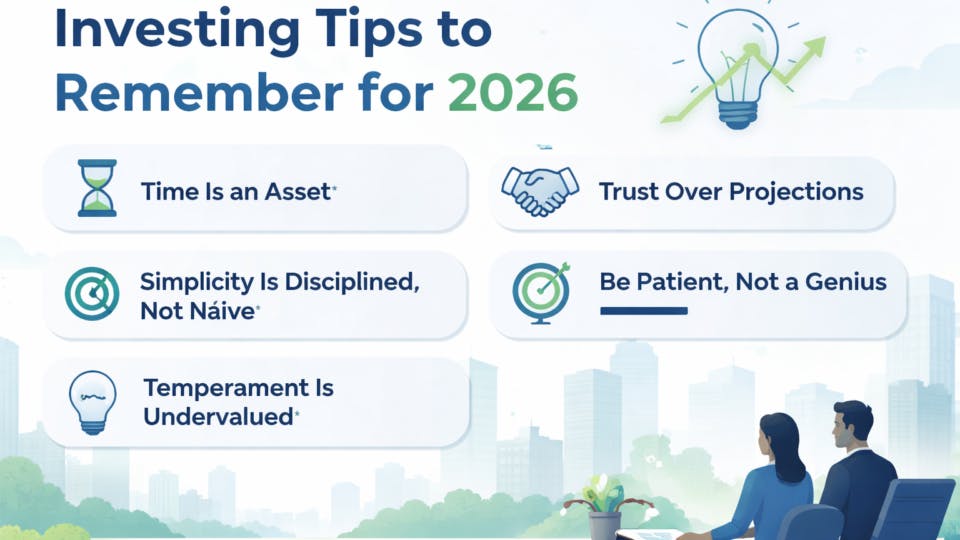

The New Year is here, and with it comes new risks, faster-moving markets, more information, and a lot of noise. Some of the main challenges investors face aren’t stock prices or timing the market, but rather judgment, discipline, and temperament. Many investors chase speed by trying to time the market, and as day trading becomes more popular through the rise of social media, it’s only becoming more difficult. But what if there is a better way? Here are some investing tips to remember that may help calm your nerves.
1. Time Is an Asset
Time is an asset—not just some variable or thing to manage. Compounding through investing is reaped by patient investors who avoid self-inflicted wounds, interruptions, and unnecessary losses due to risk. “Set it and forget it” might not be a bad idea.
2. Trust Over Projections
Investors spend a lot of time and energy paying too much attention to gurus and macroeconomic indicators. Not that those aren’t important, but maybe not as much as you think. Instead, focus on managers with long-term track records who stay in their lane and are rewarded through prudence, not sales. Cue the humorous quip Where Are the Customers’ Yachts?
3. Simplicity Is Being Disciplined, Not Naïve
“Keep it simple, stupid.” Complexity often obscures undue risk in a portfolio. Many of the best investors avoid complexity, not due to a lack of skill, but to avoid creating false confidence. If you don’t understand your investment—or your advisor doesn’t—you probably shouldn’t be investing in it.
4. Be Patient, Not a Genius
The best companies reduce the odds of bad decisions by decentralizing operations. Individual investors can implement something similar in their own portfolios by limiting forced decisions and by reducing their urge to constantly move investments around. Your investment system should protect you from yourself—don’t do so much that you become the villain. And probably don’t take stock tips from your brother-in-law who deep-fried a frozen turkey and burned down his backyard (not my brother-in-law—maybe yours).
5. Temperament Is Undervalued
Don’t try to be the smartest person in the room—be consistent. Stay focused on your long term goals, remain calm, and don’t get distracted when everyone else is either shaking in their boots or hip-hip-hooraying. Financial markets, news, social media, and even the church potluck are saturated with commentary. Intelligence and information are common; discipline is scarce.
A financial advisor should know all of these things and help you remember them—especially when emotions are high, and headlines are loud. A good advisor doesn’t just help pick investments, but helps design a diversified portfolio that spreads risk across strategies, asset classes, and time horizons. Diversification won’t eliminate volatility, but it can reduce the impact of any single mistake or market event.
Finding the right advisor is often the difference between being too close to a problem and losing your shirt, and having a disciplined second set of eyes reviewing decisions before they become costly. In a world full of noise, a thoughtful financial planner helps keep your long-term goals in focus while ensuring your portfolio isn’t dependent on any one idea, prediction, or moment in time.
Have a Happy New Year!