Category: Financial Anxiety
Predicting the direction of the market is like predicting when you will hit the bulls-eye in a dart game. The majority of the time throughout market history, the markets have been rising. History shows that the chance of your money growing in a diversified portfolio of stocks and bonds is much like the odds of your next dart hitting any number on the dartboard... except the bulls-eye. If you are going to try and time the market by moving your money in and out, you have to ask yourself how confident are you that you can hit the bullseye when you do.
Recessions are painful, no doubt about it. But they are necessary to clean out the excesses of prior growth periods... “You can’t have such a sustained period of growth
without an occasional downturn to balance things out.”
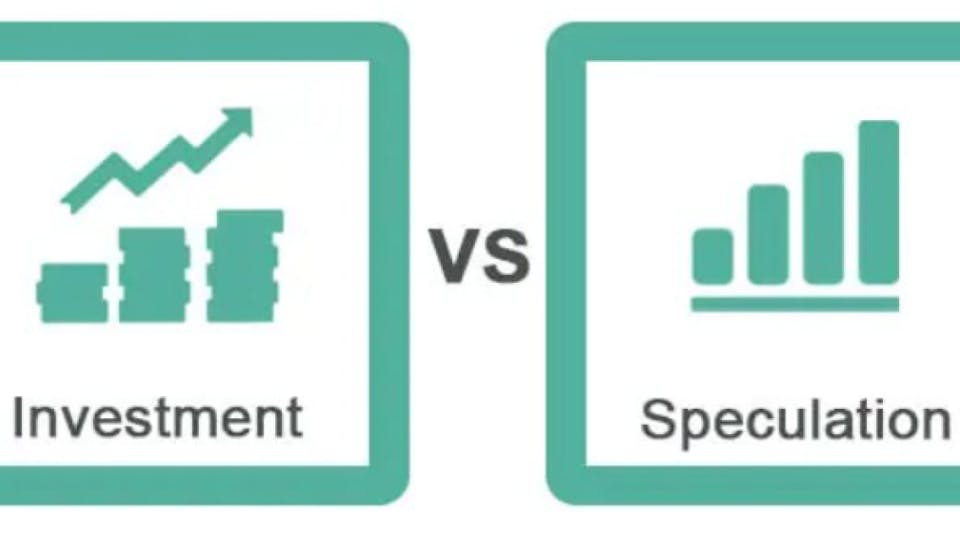
In simple terms, speculators are trying to out-smart the markets while investors simply participate in the markets. The investment time horizon is also a very important factor as speculation tends to be over the short-term while investing is over the long-term.
The S&P 500 or the Dow Jones Industrial Average are not reality. Reality is not price-to-earnings ratios and technical market studies. Symbols on the computer screen are not the real world. In the real world, companies create wealth. Stock certificates don’t. Stock certificates are simply proxies for reality.
If you haven’t used the SMART process for setting goals in your life or business, then you probably don’t know what the acronym means. S – Specific M – Measurable A – Attainable R – Relevant T – Time-bound Specific What exactly will be accomplished and by what means? Measurable How will your goal be...
The general economic model of a recession is that when unemployment rises, consumers are more likely to save than spend. This places pressure on businesses that rely on consumers’ income being spent. As a result, company earnings and stock prices decline, which can fuel a negative cycle of economic decline and negative expectations of returns.
How much money is enough? For John D. Rockefeller the answer was “just a little bit more.” At the pinnacle of his success, Rockefeller had a net worth of about 1% of the entire US economy (about 1/3 of a trillion dollars). He owned 90% of all the oil & gas industry of his time....
The hamster wheel literally describes the concept of lots of activity but making no progress. In times of crisis, either real or imagined we are encouraged to do something. If your house is on fire or if you witness a car accident you must do something and quick. Why is it that doing nothing when it comes to our investments is so difficult. When clients ask "what are you doing..." sometimes the better question is "is there anything that needs to be done" related to our investments? Are you OK with doing nothing when nothing needed to be done?
Ralph and Betty recently bought a new Ford Explorer SUV for $40,000, after carefully research before the purchase. Surprisingly, over the next few months they began to receive offers to buy the vehicle from them at smaller and smaller amounts of money. As far as they knew the vehicle was still in great shape, it had a few thousand miles on it, a ding or two but apart from that the engine still purred and ran like it did when they bought it. Still, Ralph and Betty considered selling the Ford Explorer for half of what they paid for it because they worried that something might be wrong. Should they have sold the vehicle?
Have you been fearing that you will be living in poverty in your golden years because news articles and studies have long stated that Americans do not know how to save or don’t save enough? In 2002 the Economic Policy Institute study reported that 40% of households then aged 47-64 would retire on less than...

 by Dave Conley on January 6, 2023.