Category: Weekly Economic Update
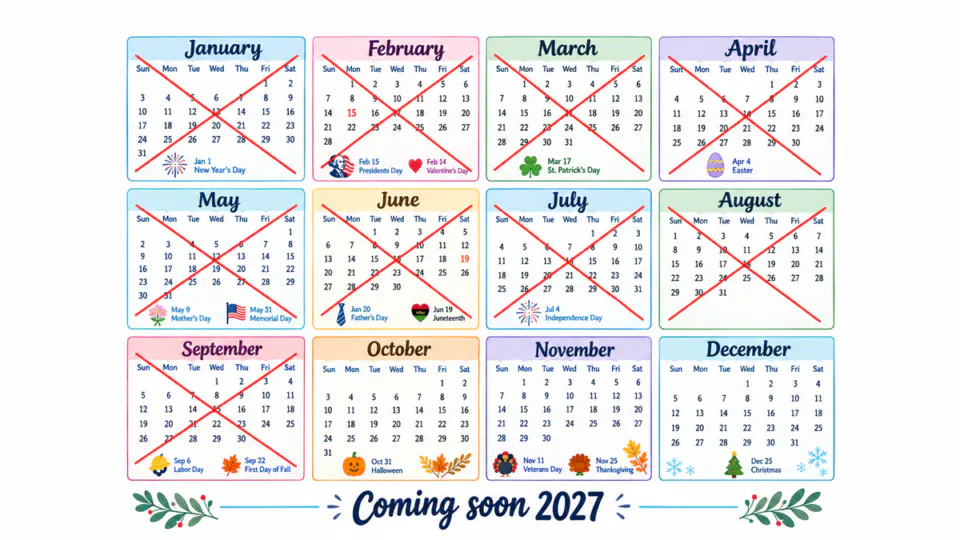
Yes, it is only October. And yes, this might feel like a way too early reminder. But the end of the year has a habit of sneaking up fast, and once the holidays hit, money matters are easy to push off until January. However, a few minutes of planning now can set you up for a stronger new year.
Many people put off investing because they are afraid of buying at the wrong time. They worry the market will drop the moment they get in. So they wait. And while they wait, their money sits in cash doing very little.
But what if you invested at the worst possible time, every single year?
Renting isn't "wasting money," and buying isn't automatically the smarter move. The best choice depends on your goals, your timeline, and your financial readiness, not a one-size-fits-all rule.
Many Americans (especially young Americans) today are struggling with overspending... With the average credit card debt for Americans hanging around $6700 per borrower...
Right now, the ten largest companies in the S&P 500 make up close to 40% of the entire index, a level we haven't seen since the 1960s.
Many business owners become so focused on growing the company that they rarely step back and look at their personal financial picture.
Financial planning and financial advice happen at the intersection of “Your Life” and “Your Money.” The challenge is that many people make financial decisions in isolation rather than viewing them as connected parts of a larger picture.
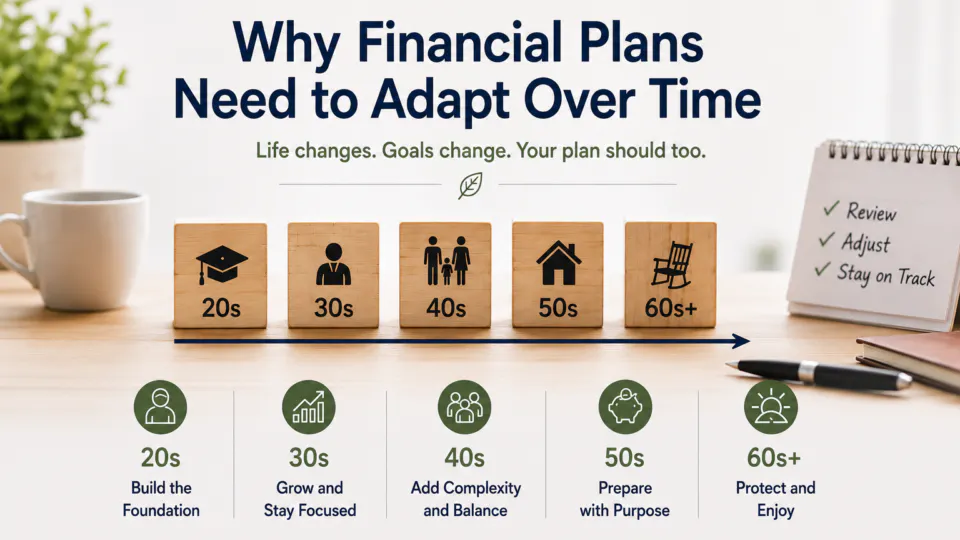
Many people treat financial planning like a one-time task. They open retirement accounts, invest money, maybe create a simple estate plan, and assume they are set for life. But life does not stay the same for very long.
How do you reconcile your head and your heart when the two seem at odds—especially when money is involved?
When markets feel gloomy, and headlines grow louder, an advisor helps separate noise from reality

 by Andrew Rabon, CPFA® on October 9, 2026.